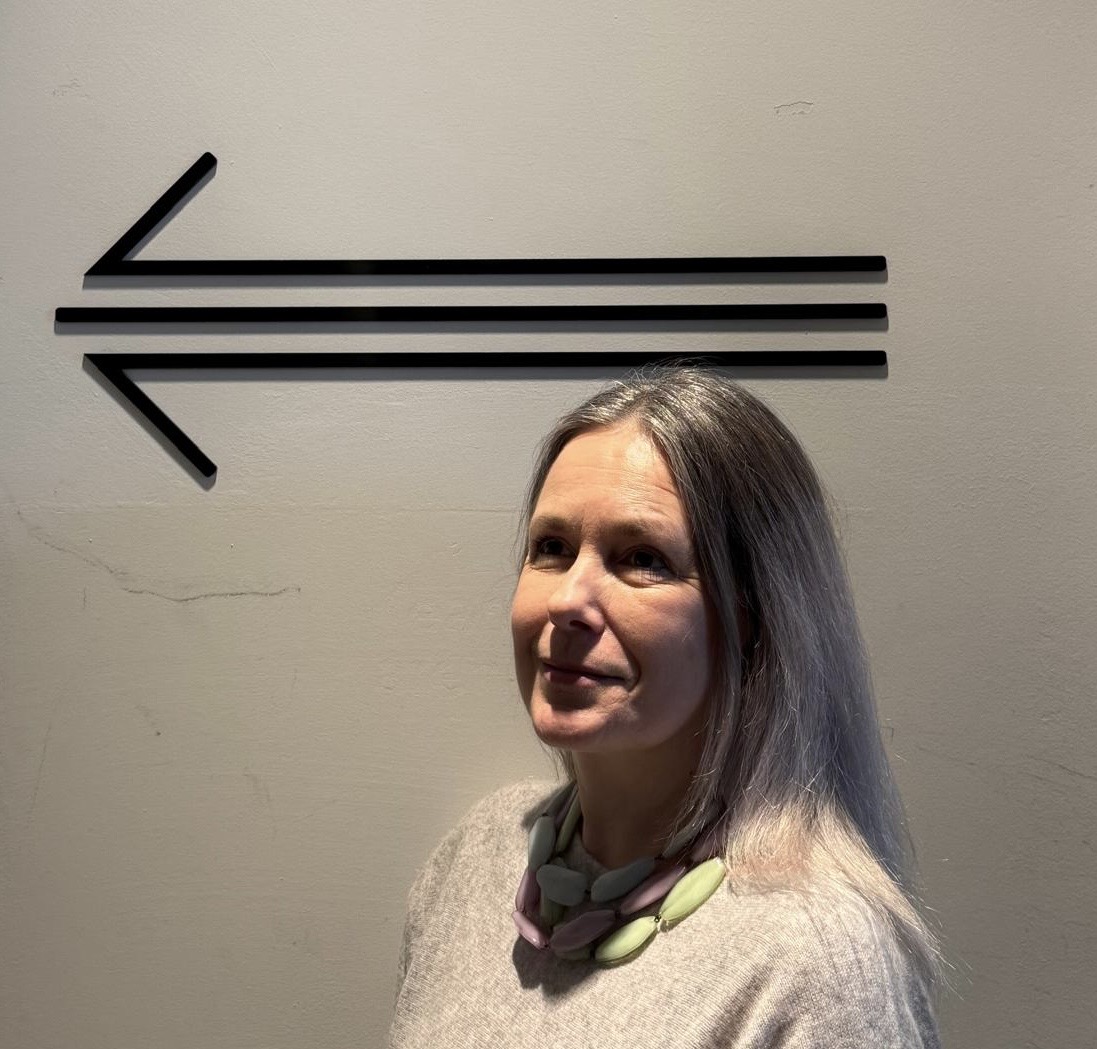
Elisa Massoni is a Milanese design journalist and educator. She works as a strategic communication consultant for cultural institutions and brands, and writes about design culture. She founded Spazio, an illustrated periodical created entirely by design professionals for young readers. She teaches design to teens and is developing expertise in digital culture and computational creativity.
What are the guiding narratives or questions that orient your practice as a design educator?
I keep asking myself what it actually means to teach design theory to designers, especially in Italy, where design has historically been about products, objects, and “Made in Italy” as part of a strong material and economic culture. Shifting away from that focus is not easy. Also, especially in Milan, design education is a business, which leads to somehow obscure selection criteria and very large classes.
I’ve been teaching at NABA for seven or eight years, and during that time I’ve seen a major change in students. At the beginning, they had a more speculative attitude and were open to theory, research, and critical thinking. Something changed, possibly with the pandemic, which hit everyone hard. When I returned to in-person teaching, I realized students’ expectations had shifted dramatically. They were much more technical, wanting clear steps, methods, and solutions, how to go from A to B to C, how to design a chair or an interior in the “right” way. In the process, there seemed to be a loss of interest in speculation, reflection, and thinking critically about what it means to design.
Would you say that this is a sign of looking for clear orientation in very confusing times?
Yes, I think so. Students were very direct in saying they didn’t understand where my course was going, and I take that very seriously. Little by little, I realized they feel very insecure. Students are very aware of how complex and unstable the world is, but they lack a safe space to reflect, to value their own thoughts, and to transform curiosity into something meaningful. They are afraid of saying what they think, and so they look for clear directions and fixed paths as a way to feel oriented.
Reflective Literacies – On how to orient oneself and find an inner compass
How should a teaching practice approach this feeling of uncertainty ?
This year I approached the challenge of uncertainty in a new way. As a designer, I ask students to trust the process, even if I can’t say exactly where we’re going. When they ask about exams or evaluation, I tell them we’re just starting. I give an initial direction, but along the way they learn that things can change and that they can trust themselves.
The best moment is when someone says they want to try something different, and I can simply support that. I also shifted how I teach design theory: most first-year students only know the “wow” side of design, not the deeper questions. So I wrote a small handbook with exercises for guidance, but while we are onsite in class we focus on conversation and group work and discuss broader topics and move away from technicalities. By exploring broader human questions, they begin to realize they already know more than they think: they just need space to trust themselves.
"Students are very aware of how complex and unstable the world is, but they lack a safe space to reflect, to value their own thoughts, and to transform curiosity into something meaningful."
Language and writing are important aspects of your practice. In one of your exercises you encourage students to “call things by their name.” Why is this important?
I like to have students read or listen to how designers talk about their projects, because they communicate on multiple levels: humanistic, metaphorical, and technical. Developing that awareness of language is crucial. It allows you to truly express yourself, to share something meaningful, rather than using words to confuse or impress.
I often emphasize going back to basics : not just revisiting what you know, but the fundamentals of language itself, the alphabet. This simplicity protects against confusion and information overload. A useful exercise is to compare how designers speak versus how brands communicate: spotting empty words, understanding intent, and seeing the difference. It’s practical, clarifying, and helps students gain precision and calm in both thinking and expression.
Literacy of Technological Grammars — On AI and boredom
Can AI tools support the process of finding one’s own voice, or do they hinder it?
One of the most moving aspects of AI is how it can act as a mirror, reflecting us back as human beings, as part of some vast human legacy. But AI mirrors what already exists, producing standardized outputs, which can be very disempowering for young designers. Instead of judging it, I want students to face it directly. We compare projects made with and without AI, exploring when it helps and when it doesn’t belong in the creative process.
Most students don’t find AI very inspiring anyway. They treat it as a shortcut, and shortcuts get boring. If you are smart, you get quickly bored. What they really enjoy is working together, talking, and thinking. It’s almost a contradiction: In the past, boredom was somehow an asset. It gave time to observe, reflect, experiment, and engage in making. That kind of boredom pushed you into the world of doing. With AI, there’s another kind of boredom: repetitive, shallow, instant results that don’t immerse you in the process of making and exploring.
My hope is that by engaging critically with AI, students can strengthen their confidence in their own voice, their own experience, and their own way of being in the world. Technology, to me, is not an ideology but a grammar: something you can learn and understand. That’s what we might call a literacy of technological grammars.
And in the end, what matters is creating the conditions where students feel free to think, to speak, and to transform hope, or “fantasy” into real life projects.