The organization 'Nouveaux commanditaires / Neue Auftraggeber:innen' experiments with a democratic form of commissioned artworks. Citizens become the patrons and commission an art project that addresses social, cultural or territorial issues. We spoke with Marie Gyger, coordinator of 'Nouveaux commanditaires Suisse / Neue Auftraggeber:innen Schweiz'.
To begin with, can you explain us how a typical project and its process looks like?
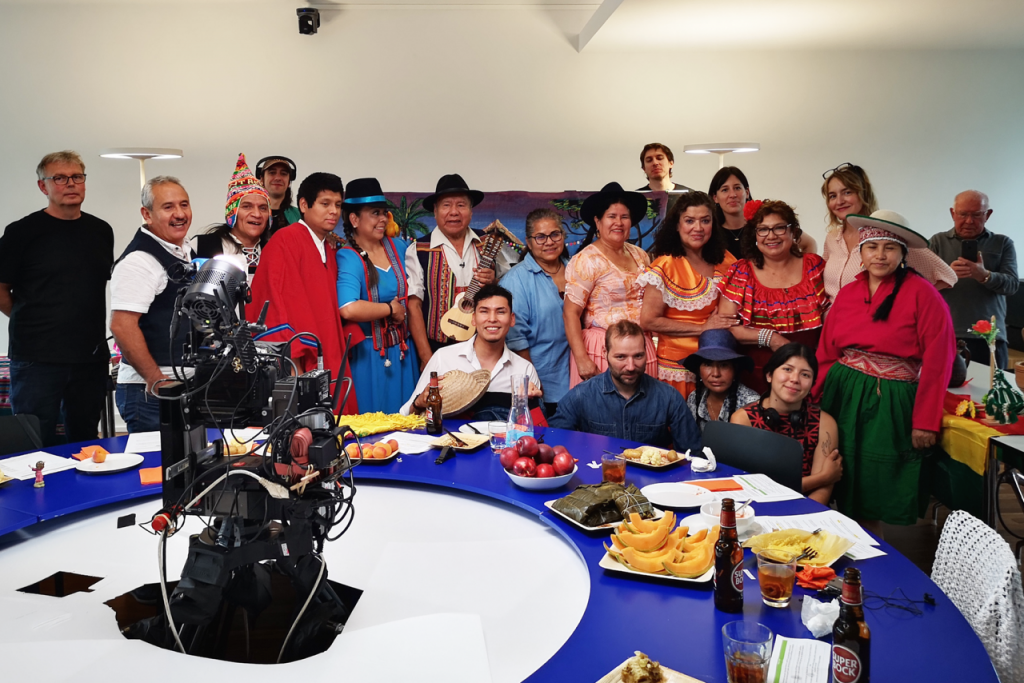
Our work is based on a protocol. A method that was invented by the French artist François Hers in the 90s. Every project begins with a group of ‘Commanditaires / Auftraggeber:innen’, i.e citizens that get together because they face an issue or want something to change. It can be various things like creating more connection between people, raising awareness on a topic, protecting nature, reactivating neighborhoods, passing on values… One current example are farmers that got together because they want to make issues of mental and physical health in agriculture more visible.
Citizens must believe that an art project can meaningfully address the issue at hand. They then contact Nouveaux commanditaires, after which a mediator becomes involved. This mediator works closely with the group of commissioners, guiding a discussion of the problem—typically over the course of one to two years. Together, they continue these conversations until they are able to draft a set of shared specifications. This document serves as both the starting point and the foundation for the artist’s work. Based on these agreed specifications, the mediator proposes a suitable artist for the project.
From the outset, it is important to approach art in a broad sense. The chosen medium will be whatever best serves the project: it might be a film, a sculpture, or a painting, but it could just as easily take the form of a written story, a theatre piece, or another artistic expression. After that, the artist, the mediator, and the commissioners meet to see whether the chemistry works. If the collaboration feels right, they begin working together.
In essence, the artist develops a first proposition – a project draft. If the commissioners approve it, the project moves into production. A key aspect of the process is that the commissioners remain involved at every stage. They must first approve the artist proposed by the mediator. They also have the authority to accept or reject the artist’s sketches or concepts. They might say, for example, “No, this sketch does not fully align with our guidelines. Please revise it.”
In the end, the commissioners also kind of «represent» the finished artwork. Often, they almost feel like co-authors: they defend the project and present it to the municipality, to the media, or to the rest of their community.
(Source: NC-NA CH)
The step from ‘citizens wanting to tackle an issue’ to ‘knowing about Nouveaux commanditaires and reaching out to you’ seems like a bottleneck. How do people know about you?
Our aim is to be active in rural areas. Not just big cities, where culture is already very present and accessible. This is indeed a challenge. To make ourselves known, we give public presentations and build connections with local associations.
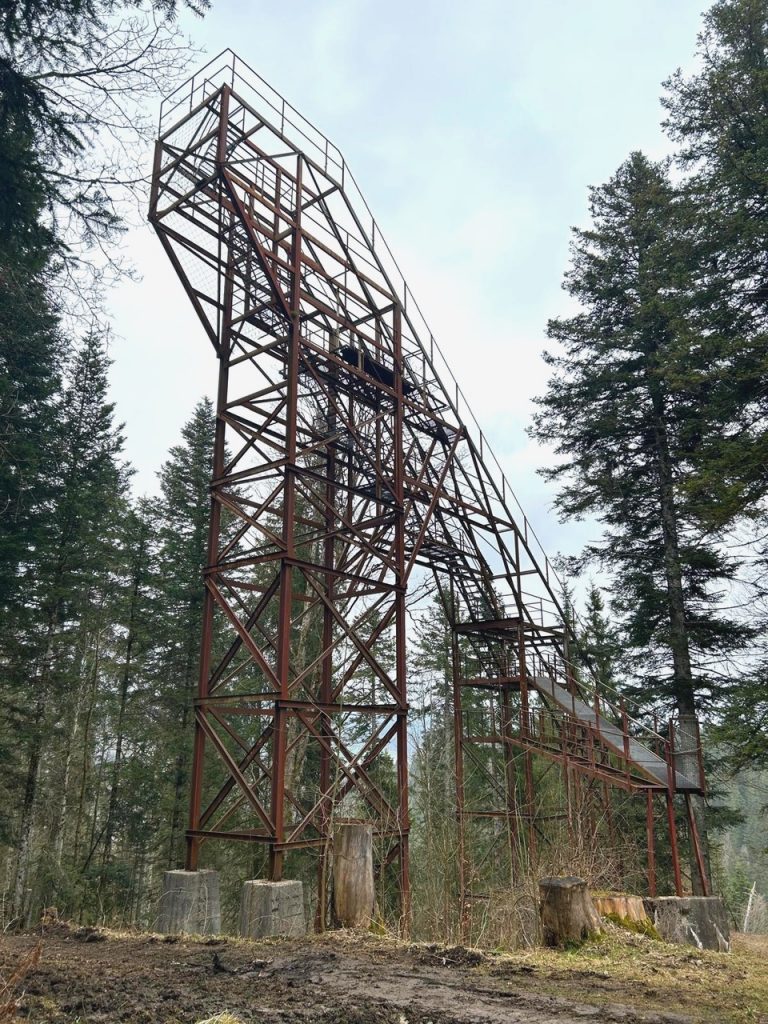
Projects can begin in many different ways. For instance, a new project is currently starting in Le Locle, centered on an old ski jump and its metal structure. In the 1980s, Le Locle hosted major international ski jumping competitions that attracted thousands of spectators. Many residents feel nostalgic about those large gatherings and festive events. This commission began when someone posted a photo of the ski jump on Facebook, asking, “What is this metal structure?” The post sparked numerous reactions. Eventually, someone in Le Locle who was familiar with Nouveaux commanditaires thought there was here favourable ground to launch a new commission, and suggested contacting us—and that is how the project began.
How do artists react to your approach?
Artists usually work independently, without commissioners. When they collaborate with Nouveaux commanditaires, however, the process is quite different, as they must follow the specifications defined by the commissioners. In addition, our projects involve a long-term commitment from the artists. But this can all be very rewarding, as it allows them to see that their work plays a meaningful role and serves a function in society.
Let’s dive deeper here, what are the specific roles of the commissioners, mediators and artists?
What matters most is that everyone stays within their area of expertise, and in our protocol, each role is clearly defined. In many participatory cultural projects, citizens are expected to contribute as if they were the artists themselves. Our approach is different: citizens explain the issue they want to address, and the artist responds. Artists are skilled at imagining ideas that approach a problem from unexpected angles and offer new perspectives.
Open communication is essential to ensure that the needs are clearly expressed and the artwork genuinely responds to them. This is where the mediator plays a key role. They must have expertise in the art field and the ability to guide and support the citizens, requiring impartiality, careful listening, and sensitivity to what is at stake. During the development phase, the mediator ensures that each role is respected. Commissioners cannot reject a proposal simply because of personal preferences, like saying, “We don’t like it because it’s green.” The mediator clarifies that the proposal meets the agreed specifications, protecting the artistic integrity of the project while keeping the process fair.
At first, commissioners often do not fully understand their role. They may suggest concrete ideas, such as, “We could build a large fountain so people will gather.” The mediator then gently redirects the conversation: “Designing the outcome is the artist’s role. But can you explain why a fountain matters to you?” Through this dialogue, commissioners gradually come to understand and embrace their role in the process.
One typical problem in participatory processes is that only a specific milieu shows up. (Privileged) People who have enough time to participate. Do you face the same problem?
Exactly — and it’s important to avoid this. We try not to involve people who are already heavily engaged in other community tasks. Once we have a core group and a clear understanding of the issue, we identify who really needs to be part of the conversation. We also speak very directly with the group, asking: “Do you feel that you truly represent the people affected by the issue you want to discuss?” Usually, this prompts reflection, and that self-examination becomes a crucial part of the conversation.
How do municipalities and planning authorities react to your 'radical' bottom-up process?
They appreciate it because they see the benefits of a bottom-up approach. Many cities have struggled with imposing artworks on communities. Now, they recognize that our process allows people to identify with the outcome, whatever form it takes. This sense of identification is crucial—it can even strengthen democracy. For example, if you feel connected to an art project in your village, you are more likely to engage in other community activities. Today, many authorities face challenges around citizen engagement, so our approach is particularly compelling, and municipalities can clearly see its value.
What are common challenges in your projects?
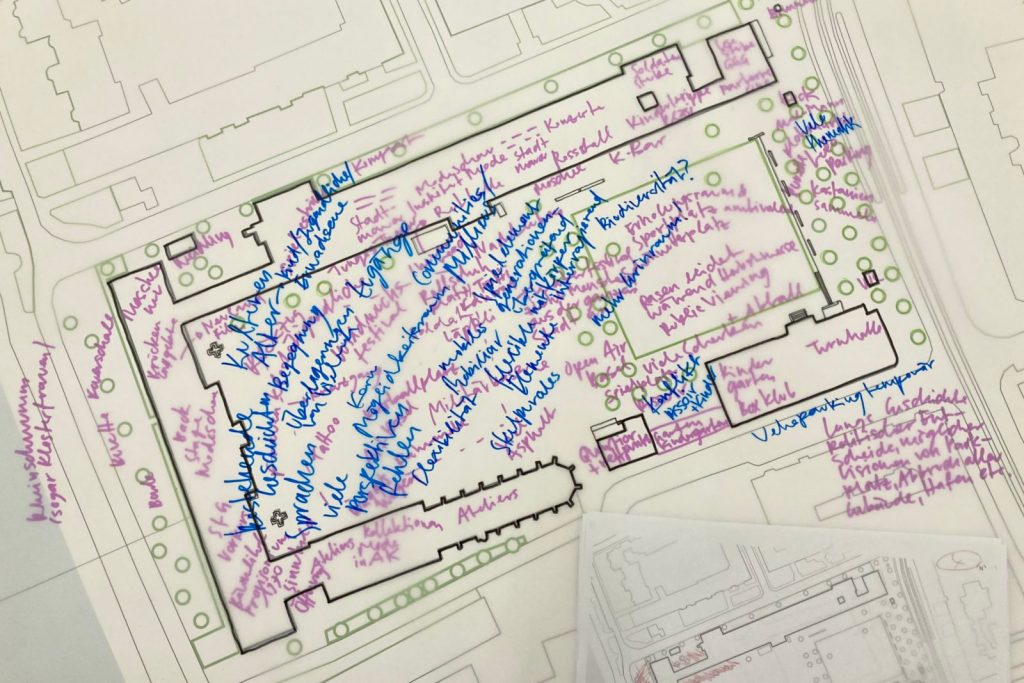
One major challenge is helping people understand that a good commission takes time—often three to six years, and sometimes even longer. We are no longer accustomed to working on such long time frames. Another complication arises when municipal staff change due to elections, which can put a project on hold until newly elected officials agree to continue supporting it. Time is essential because citizens need the mediation process to have a transformative effect. A quality project requires space to rest, reflect on what has been discussed, and let ideas mature. Perhaps back in the 1990s, when Nouveaux commanditaires was founded in France, this was less of an issue? Today, by contrast, there is an obsession with rapid production and instant results.
As our last question, do you have other areas in mind where your protocol could be transferred to beyond art projects?
The protocol could also be applied in the sciences, allowing research to be commissioned directly by citizens. In fact, this idea was already envisioned in France when Nouveaux commanditaires was founded. In Switzerland, which hosts leading scientific institutions and has abundant resources for research, this approach has particularly strong potential.
The interview was conducted by Felix Schultz & Lea Schir and edited by Felix Schultz.